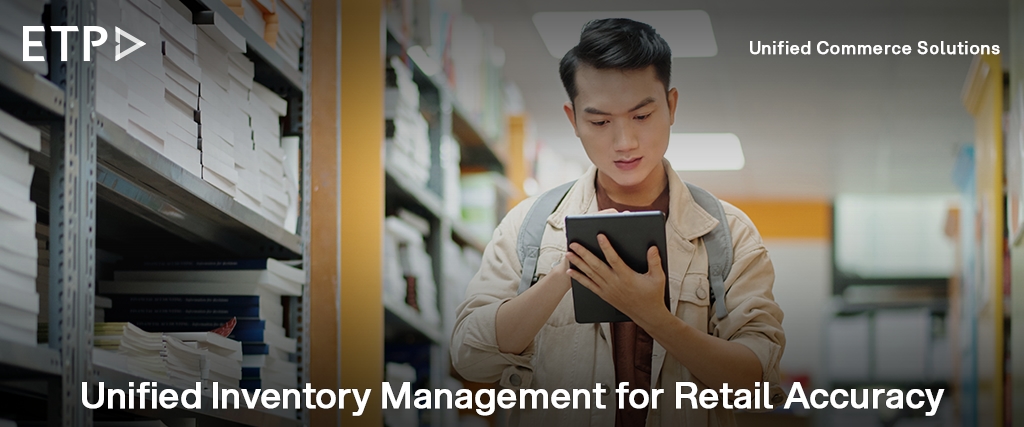
While strong sales are the backbone of any retail business, its inventory management process can signify the difference between success and failure for the business. Inventory management can be generally perceived to be a balancing act between demand and supply rather than just a business operation. While retail as a business has been evolving over the last few decades due to the influence of technology and innovations, the processes involved in the retail business are also a part of this evolution. The inventory management process has witnessed the need for a significant upgrade, especially due to the advent of new channels of shopping leading towards omni-channel. However laying the groundwork for a successful inventory management strategy and process that matures along with the business is extremely important for the success and sustenance of the business. Below are the basic steps for setting up a solid inventory management process.
- Set the key performance indicators (KPIs).
Setting, using and sticking to KPIs to manage inventory can be one of the best methods with regards to to measuring the impact of overall business operations. Every business and therefore their set of KPIs are different, but there are a few common ones that retailers must look at:
Gross Margin Return on Investment (GMROI): This analyzes the firm’s ability to turn inventory into cash above the cost of the inventory. It is an inventory profitability evaluation ratio, calculated by dividing the gross margin by the average inventory cost.
Gross Margin Return on Footage (GMROF): This is an important KPI that measures the inventory productivity that expresses the relationship between the business’ gross margin, and the area allotted to the inventory. This is critical, especially when stocking inventory at the store for selling.
Average Days to Sell Inventory (DSI): This is a measure of the time period taken by the retail company to convert inventory into sales, and this metric varies by industry. An important point to remember while using this measurement is that large-ticket items typically move slower than small-ticket items. The formula for calculating DSI is (Inventory/Cost of Sales) x 365, according to Investopedia.
Stock-Outs: This KPI represents the number of times a demand cannot be fulfilled due to the unavailability of the required inventory. This helps in obtaining a big-picture view of the effectiveness of the business in purchasing and production.
Rate of Return: This monitors and rates the percentage of orders that are returned and therefore need to be restocked. Tracking the reason for returns while monitoring this KPI is important to identify and address any trends in problems in the supply chain and thus mitigate risks of costly returns.
- Specify the W’s.
Efficient product organization aids a smooth inventory management process and can help in other processes such as picking, packing and shipping products accurately and quickly. At the basic level inventory organization begins with where and what – for achieving profitability, optimizing costs and offering superior customer experiences – that is the ‘why’.
Where: Evaluating the storage space available and creating zones, including number of doors/docks, recording their size and location, and non-inventory storage space; within these zones, determining sections, labelling each zone section clearly for employees to see and easily navigate.
What: Accurately labelling each product to avoid confusion and time in finding what customers ordered.
- Choose the right software.
As the business grows, it is necessary to have an inventory management system that scales with it. Inventory management becomes more complicated with each new product the business sells and every new customer who buys it. Thus it is important to employ the right inventory management software (IMS) to help streamline multiple processes with a single program.
In order to find the right inventory management solution, it is crucial to define the pain points that need to be solved. These pain points may include overstocking/understocking, incorrect inventory levels or sales reporting, handling omni-channel inventory. Determining these needs will help in identifying the features each solution offers and how they will address the needs. Next is to evaluate the level of customization and compatibility with other systems, especially those that are currently being used or are going to be implemented within the business. Assessing the customer service capabilities (e.g., 24/7 service, dedicated representative) of the solution providers is a must as it can make a big difference when there is a need additional support.
- Check and monitor.
Frequent and organized check-ins will help streamline all aspects of inventory optimization together. Considering cycle counting programs in order to gauge the accuracy of inventory levels through routine audits can help in understanding the product sell-through rates, which can then be used to liquidate products that aren’t moving in order to optimize costs and storage space. It will also enable the retailer to introduce new products into the mix that share similar characteristics with the biggest sellers. Finally, keeping an eye on the product quality and any discrepancies in size, color or style can help increase customer satisfaction and lead to lower return rates.
Continued evaluation is key for enhancing the inventory management process. Having a well-run process in place — from inventory organization to implement the software to data capture and then review and analysis – can ably support the growing business by adding efficiencies to shipping processes, reducing fulfillment timeframes, lowering rate of returns and enhancing customer satisfaction while strengthening the bottom line.
- 如何将您的线上商店和实体店整合为一个统一、连贯的客户体验(无需经历长达数月的系统集成烦恼)。
- 利用AI驱动的洞察力来管理库存、减少浪费,并最大限度地提高各渠道的销售额。
- ETP平台目前如何为领先零售商带来可量化的效率提升和显著的营收增长,以下是一些实际案例。