6 Signs Retailers Need Omni-channel POS Software in the Philippines
A customer walks into a store looking for a product they saw on the retailer's website. The store associate checks the POS system, but the item appears unavailable.
A quick check with another store reveals that the product is sitting in its warehouse. Yet, there is no straightforward way to complete the purchase and arrange fulfilment.
Situations like this point to a gap in how a retailer manages its sales channels.
For retailers in the Philippines operating multiple stores, e-commerce websites and other digital sales channels, a traditional point-of-sale system may no longer provide the level of connectivity their operations require.
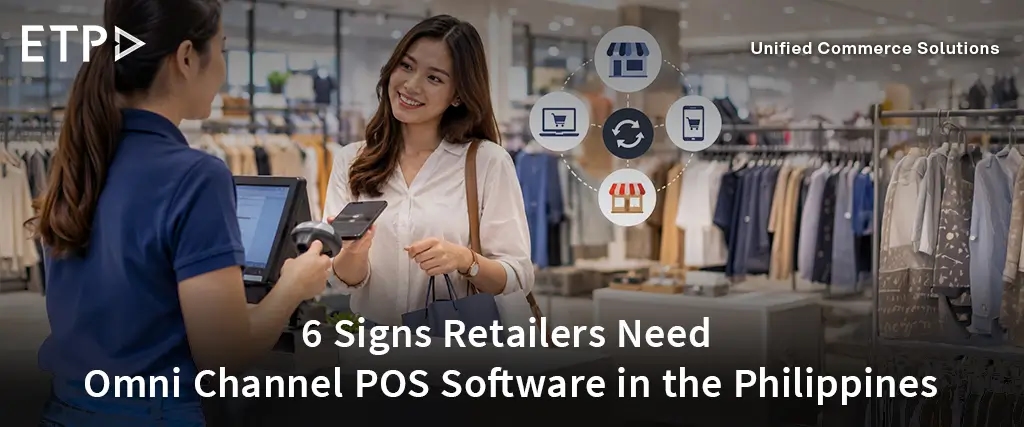
Omni-channel POS software connects in-store transactions with inventory, customer information, promotions and online order management. It gives retailers a more connected view of their operations while allowing customers to move between shopping channels with fewer interruptions.
But how do you know when your existing POS setup needs an upgrade?
Here are six signs that your retail business may benefit from an omni-channel POS solution.
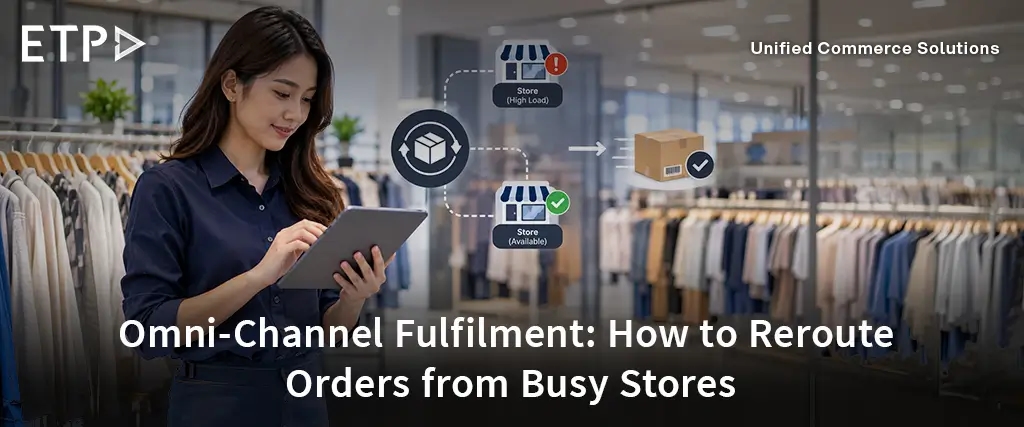
1. Inventory Information Is Different Across Stores and Online Channels
One of the clearest signs of disconnected retail operations is inconsistent inventory information.
A product may appear available on your e-commerce website but be out of stock at the selected store. Alternatively, a store associate may tell a customer that an item is unavailable without knowing that another branch has sufficient stock.
These discrepancies often occur when inventory is managed through separate systems that do not communicate effectively.
For retailers operating multiple locations across the Philippines, maintaining accurate stock information becomes increasingly important as their store networks and online operations grow.
An omnichannel retail POS system should connect sales and inventory information across channels, allowing retailers to:
- View stock availability across stores and warehouses.
- Update inventory as transactions take place.
- Identify available products across different locations.
- Make better-informed replenishment and stock allocation decisions.
For example, if a customer visits a store in Makati looking for a particular product, the store associate should be able to check its availability at another branch and help arrange the purchase.
A connected inventory system makes this possible by giving store teams access to a consolidated view of stock across locations.
2. Customers Cannot Purchase Products Available at Other Store Locations
A customer finds the product they want, but the store does not have their preferred size, colour or variant.
What happens next?
In a traditional retail setup, the associate might suggest visiting another branch or waiting until the product is replenished. The customer may decide to leave and look elsewhere.
This creates an avoidable lost sales opportunity, particularly when the retailer has the required product available elsewhere in its network.
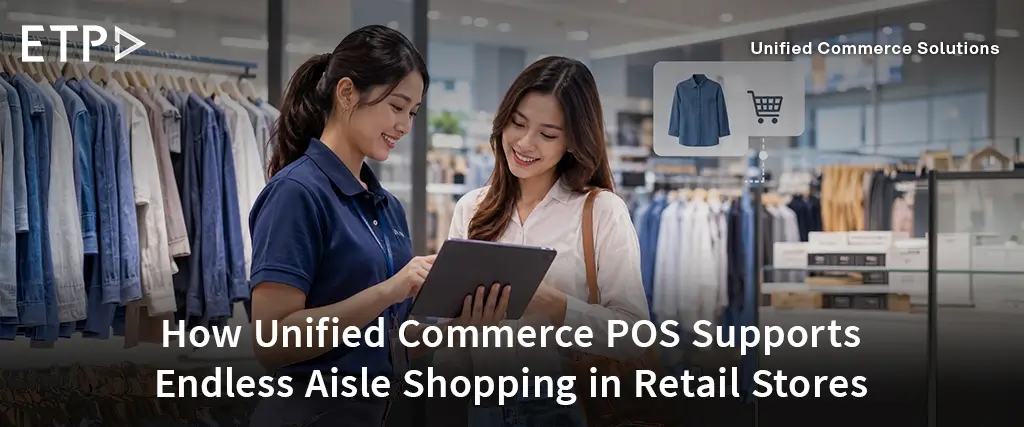
An omnichannel POS for retail can address this limitation through capabilities such as Endless Aisle.
Endless Aisle allows store associates to access product availability beyond their immediate store inventory and help customers place orders for products available at other locations or fulfilment points.
This can help retailers:
- Offer products beyond the inventory physically available in a store.
- Help customers find different sizes, colours and product variants.
- Fulfil orders through another store or warehouse, where supported.
- Reduce missed sales opportunities caused by local stock limitations.
Consider a fashion retailer with stores across Metro Manila. A customer wants a particular shoe size that is unavailable at the current branch. The associate checks stock availability across the retailer's network and helps arrange an order from another location.
The customer gets access to a wider product selection without having to visit multiple stores.
3. Online Orders and In-Store Sales Are Managed Separately
Managing store sales and online orders through disconnected systems can create operational complications.
An online order may require a separate process for checking stock, confirming availability, identifying the fulfilment location and updating the order status. Meanwhile, store teams continue managing walk-in transactions through their POS system.
When these processes operate independently, retailers may struggle to coordinate orders and fulfilment across their network.
This becomes particularly challenging when customers expect options such as:
- Buy Online, Pick Up In-Store (BOPIS).
- Click and Collect.
- Ship-from-store.
- Buy online and return in-store.
- Orders fulfilled from alternative store or warehouse locations.
An omni-channel point-of-sale solution connected to order management helps retailers coordinate these activities.
Instead of treating online and in-store transactions as separate operations, retailers can connect order information with inventory availability and fulfilment processes.
For instance, a customer places an order online and selects a nearby store for collection. The retailer needs to identify the available stock, coordinate order preparation and make the order ready for collection.
A connected POS and order management setup helps store teams participate in these fulfilment activities while maintaining visibility into the order.
Read More: Omnichannel Retail POS Software Guide for Retailers
4. Store Associates Depend on Multiple Systems to Complete a Sale
A store associate should be able to focus on helping customers find and purchase products.
However, when retail operations depend on multiple disconnected applications, even routine activities can become complicated.
An associate may need to switch between different systems to check inventory, look up customer information, verify promotions or process an exchange. This adds unnecessary steps to the customer interaction and can slow down store operations.
The problem becomes more noticeable during busy shopping periods when stores handle higher transaction volumes and customer enquiries.
An integrated omni-channel retail POS system can bring relevant store operations together through a connected interface.
Depending on the platform's capabilities, this may include:
- Access to product and inventory information.
- Customer purchase history and loyalty information.
- Centralised promotions and pricing.
- Sales, returns and exchange processing.
- Access to orders placed through other channels.
For example, a customer visiting a store in Cebu may want to exchange an online purchase. The associate needs access to the relevant order and transaction information to handle the request according to the retailer's exchange policy.
Having connected customer and transaction information can make these interactions easier to manage.
5. Customers Experience Different Levels of Service Across Shopping Channels
Customers may discover a product on social media, browse it on a retailer's website, visit a physical store to see it in person and eventually complete the purchase through a different channel.
They expect the experience to remain consistent throughout this journey.
However, disconnected retail systems can make this difficult.
Product availability may differ between the website and store. Promotions may not be applied consistently. Customer information and purchase history may not be readily accessible across touchpoints.
These gaps can make shopping more complicated than it needs to be.
An omni-channel POS system helps retailers connect important elements of the shopping journey, including:
- Product and inventory information.
- Customer profiles and purchase history.
- Promotions and loyalty information.
- Sales transactions across channels.
- Order fulfilment and returns.
For retailers, this means store teams can work with more relevant customer and product information when assisting shoppers.
For example, a customer who has browsed products online may visit a physical store to make a purchase. Having access to relevant product and customer information can help the associate provide more informed assistance.
The objective is to make the transition between online and offline shopping easier for customers.
6. Managing Promotions Across Stores and Online Channels Takes Too Much Effort
Retail promotions often run across multiple stores, websites and other sales channels.
However, when pricing and promotions are managed independently, retailers may find it difficult to maintain consistency.
A promotional offer might be updated on the website but require separate changes in store systems. Store teams may also have to verify discount eligibility manually or clarify differences between offers.
Apart from creating additional work, these inconsistencies can affect the customer experience at checkout.
An omni-channel retail POS solution connected to centralised promotions management can help retailers coordinate offers across their sales channels.
Relevant capabilities may include:
- Centralised promotion configuration.
- Consistent pricing and discount application.
- Management of promotional offers across participating channels.
- Integration of loyalty offers with checkout processes.
- Visibility into promotional transactions.
For instance, a retailer running a promotional campaign across its physical stores and e-commerce website needs customers to receive the applicable offer regardless of where they complete their purchase.
Connecting POS with promotions management helps retailers maintain greater control over how offers are applied across channels.
What Should Retailers Look for in omni-channel POS Software?
Recognising these six signs is the first step. The next is evaluating whether a new POS system can address the operational gaps in your existing setup.
For established retailers in the Philippines, the right solution should support more than transaction processing.
Consider the following capabilities when evaluating an omni-channel POS system:
| Capability | What retailers should look for |
|---|---|
| Unified inventory management | Visibility into stock across stores, warehouses and sales channels. |
| omni-channel order management | Ability to manage orders from different channels and coordinate fulfilment. |
| Cloud POS | Centralised retail operations with access to relevant information across store locations. |
| Endless Aisle | Ability to access products available beyond the current store's inventory. |
| omni-channel fulfilment | Support for fulfilment options such as Click & Collect and Ship-from-Store. |
| Promotions management | Centralised management of pricing, discounts and promotional offers. |
| Customer information | Access to relevant customer profiles, purchase history and loyalty information. |
| Offline capabilities | Ability to continue processing transactions when internet connectivity is interrupted, with synchronisation when connectivity is restored. |
Retailers should also evaluate how the POS platform integrates with their existing e-commerce, payment and business systems. The implementation should support their current operating model while accommodating future requirements.
Connecting Retail Operations with ETP Unify
When the six signs discussed above begin affecting everyday operations, retailers may need to look beyond a traditional billing system.
ETP Unify is an AI-powered, cloud-native unified commerce platform designed to connect retail operations across physical and digital channels.
Its Cloud POS and Retail Operations capabilities bring together store-level activities with broader retail functions, helping retailers manage transactions and support omni-channel shopping journeys.
Relevant capabilities include:
- Cloud POS: Supports retail transactions with rapid billing, smart search, offline capabilities and real-time synchronisation.
- Unified Inventory Management: Provides inventory visibility across stores and other fulfilment locations.
- Smart Order Management: Supports order processing and fulfilment across channels.
- Endless Aisle: Allows store associates to access products available across the retailer's network.
- omni-channel Fulfilment: Supports journeys such as Click & Collect and Ship-from-Store.
- Unified Promotions Management: Helps retailers coordinate promotional offers across channels.
For retailers in the Philippines looking to connect their store operations with e-commerce and other sales channels, these capabilities provide a foundation for managing a more unified retail environment.
Is It Time to Rethink Your Retail POS System?
A POS system plays an important role in how retailers manage daily store operations. But as businesses expand across locations and sales channels, the ability to connect inventory, orders, customer information and promotions becomes equally important.
If your teams regularly deal with inconsistent stock information, disconnected order processes or difficulties coordinating promotions, these could be signs that your existing POS infrastructure needs attention.
An omni-channel POS software solution can help bridge these operational gaps by connecting store transactions with the wider retail ecosystem.
For retailers planning their next stage of growth, evaluating the right technology today can help create a more connected foundation for tomorrow's retail operations.
Explore ETP Unify Cloud POS and Retail Operations to understand how connected POS capabilities can support your retail operations.
Common Questions Retail Leaders Ask!
1. What is omni-channel POS software?
Omni-channel POS software connects in-store transactions with other retail channels, such as e-commerce websites and online marketplaces. It helps retailers manage sales, inventory, customer information and promotions across their physical and digital operations.
2. How is an omni-channel POS system different from a traditional POS system?
A traditional POS system primarily handles in-store transactions, while an omnichannel POS system connects store operations with other sales channels. This gives retailers better visibility into inventory, orders and customer interactions across their retail network.
3. Why do retailers in the Philippines need an omnichannel POS system?
Retailers managing multiple stores and online sales channels need consistent information across their operations. An omni-channel POS system helps connect inventory, transactions and customer information, making it easier to coordinate activities across physical and digital channels.
4. Can omni-channel POS software integrate online and offline retail operations?
Yes. An omni-channel POS solution can connect physical store operations with e-commerce and other digital channels. Depending on its capabilities, it can support unified inventory visibility, online order fulfilment, Click & Collect and Ship-from-Store.
5. What features should retailers look for in an omni-channel POS solution?
Retailers should look for capabilities such as cloud POS, unified inventory management, order management, centralised promotions, customer information management and omnichannel fulfilment support. Integration with existing retail and e-commerce systems is also important.
6. Can an omni-channel POS system support multiple retail store locations?
Yes. An omni-channel retail POS system can connect operations across multiple store locations, helping retailers access consolidated sales and inventory information. This is particularly useful for businesses managing several branches alongside online sales channels.
- 如何将您的线上商店和实体店整合为一个统一、连贯的客户体验(无需经历长达数月的系统集成烦恼)。
- 利用AI驱动的洞察力来管理库存、减少浪费,并最大限度地提高各渠道的销售额。
- ETP平台目前如何为领先零售商带来可量化的效率提升和显著的营收增长,以下是一些实际案例。