Quick Summary
Acquiring new customers has become increasingly expensive, making customer retention one of the most important drivers of sustainable retail growth. While discounts and promotions may attract shoppers, long-term profitability depends on building lasting customer relationships.
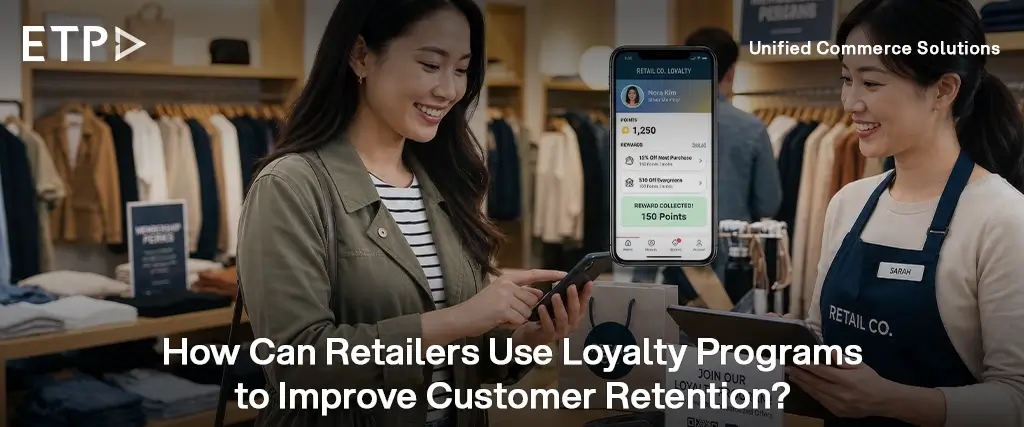
Modern loyalty programs have evolved beyond simple points and rewards. Today's leading retailers leverage customer relationship management (CRM) platforms, intelligent personalization, and data-driven engagement strategies to create meaningful customer experiences that drive repeat purchases and brand loyalty.
Successful loyalty programs are powered by integrated technologies such as crm and customer loyalty solutions, loyalty management systems, customer loyalty management platforms, and AI-driven personalization engines that help retailers understand, engage, and retain customers across every touchpoint.
Why Is Customer Retention Becoming a Strategic Priority?
Retailers across India, Southeast Asia, and APAC face increasing competition, rising acquisition costs, and changing consumer expectations.
Customers today have more choices than ever before.
As a result, retailers must focus not only on acquiring customers but also on maximizing customer lifetime value.
Research from Bain & Company suggests that increasing customer retention rates can significantly improve profitability because repeat customers typically spend more, purchase more frequently, and cost less to serve than new customers.
This shift is driving retailers to rethink how they build loyalty.
Expert Insight: The most successful loyalty programs do not reward transactions alone. They reward relationships.
Why Traditional Loyalty Programs Are Losing Effectiveness
Many retailers still rely on loyalty programs built around basic discounts, coupons, and point accumulation. While these programs can generate short-term engagement, they often fail to create genuine customer loyalty. Common challenges include:
Limited Personalization
Every customer receives similar rewards regardless of preferences or purchasing behavior.
Disconnected Customer Data
Customer interactions across stores, websites, apps, and marketplaces remain fragmented.
Promotion Fatigue
Excessive discounting reduces program effectiveness and can erode profit margins.
Lack of Omni-channel Consistency
Customers expect seamless experiences regardless of where they shop.
When loyalty programs operate independently from broader customer engagement strategies, their impact on retention remains limited.
What Makes Modern Loyalty Programs More Effective?
Today's loyalty leaders focus on relevance rather than rewards alone.
Modern loyalty programs combine customer data, behavioral insights, and real-time engagement to deliver personalized experiences.
Key characteristics include:
- Personalized offers
- Tier-based rewards
- Omni-channel engagement
- Experiential benefits
- Gamification strategies
- Real-time customer recognition
This evolution is being enabled by advanced customer relationship management platforms and integrated commerce technologies.
How Does Customer Relationship Management Improve Loyalty?
Effective loyalty programs depend on a deep understanding of customer behavior.
A robust customer relationship management platform provides retailers with a unified view of every customer interaction across channels.
This includes:
Purchase history
Shopping preferences
Product interests
Loyalty activity
Customer service interactions
Engagement patterns
By consolidating this information into a single customer profile, retailers can create more relevant and personalized experiences.
The Power of CRM and Customer Loyalty Integration
When crm and customer loyalty systems operate together, retailers gain the ability to:
- Segment customers more accurately
- Deliver personalized offers
- Predict churn risk
- Identify high-value customers
- Trigger automated engagement campaigns
This transforms loyalty from a reactive rewards program into a proactive retention strategy.
Expert Insight: Retailers that rely on fragmented customer data often struggle to deliver personalized experiences. Integrated CRM and loyalty platforms create a single source of truth for customer engagement.
Why Is a Loyalty Management System Essential?
As loyalty programs become more sophisticated, manual management becomes increasingly difficult.
A modern loyalty management system helps retailers automate and scale customer engagement initiatives. Core capabilities include:
- Reward Management
Manage points, tiers, benefits, and redemption rules across all channels.
- Customer Segmentation
Create targeted campaigns based on customer behavior and value.
- Campaign Automation
Automatically trigger rewards, promotions, and engagement activities.
- Performance Analytics
Measure program effectiveness through retention, participation, and customer lifetime value metrics.
A centralized loyalty platform allows retailers to create consistent experiences while maintaining operational efficiency.
How Can Unified Promotions Improve Loyalty Outcomes?
Many retailers treat promotions and loyalty programs as separate initiatives.
Leading retailers integrate both strategies through unified promotions management.
This enables retailers to coordinate:
- Loyalty rewards
- Personalized discounts
- Seasonal campaigns
- Membership benefits
- Store promotions
- Digital offers
The result is a more consistent and relevant customer experience.
Instead of offering generic discounts to all shoppers, retailers can deliver targeted incentives based on customer behavior and preferences.
This approach improves both customer satisfaction and promotional effectiveness.
How Is AI Transforming Customer Loyalty?
Artificial intelligence is reshaping how retailers engage customers.
Rather than relying solely on historical purchase behavior, AI enables retailers to anticipate future customer needs and preferences.
AI-Powered Product Recommendation
One of the most impactful applications is AI-powered product recommendation.
By analyzing browsing behavior, purchase history, and customer preferences, AI can suggest products that are highly relevant to individual shoppers. Benefits include:
- Increased basket size
- Higher conversion rates
- Improved customer satisfaction
- Stronger engagement
- Greater loyalty program participation
According to McKinsey, personalization driven by advanced analytics and AI can significantly improve customer acquisition, retention, and revenue growth.
Predictive Customer Retention
AI can also identify customers at risk of disengagement and trigger targeted retention campaigns before churn occurs.
This proactive approach helps retailers strengthen customer relationships over time.
Practical Strategies Retailers Can Use to Improve Customer Retention
- Create a Unified Customer View
Integrate customer interactions across all channels to develop comprehensive customer profiles.
- Personalize Every Engagement
Use CRM insights and AI recommendations to tailor offers, rewards, and communications.
- Reward More Than Purchases
Recognize activities such as reviews, referrals, app engagement, and social interactions.
- Optimize Promotions Strategically
Leverage unified promotions management to deliver relevant incentives rather than blanket discounts.
- Continuously Measure Program Performance
Monitor customer lifetime value, retention rates, redemption activity, and engagement metrics.
Retailers that continuously refine loyalty strategies based on data achieve stronger long-term results.
How ETP Helps Retailers Build Customer Loyalty at Scale
Modern customer loyalty requires more than a standalone rewards platform.
Retailers need integrated technologies that connect customer engagement, promotions, commerce operations, and analytics.
ETP Unify’s Customer Relationship Management solution helps retailers create personalized and scalable loyalty experiences through:
- Unified customer profiles
- Integrated CRM and customer loyalty capabilities
- Advanced loyalty management system functionality
- Customer loyalty management automation
- Unified promotions management
- AI-powered product recommendation capabilities
- Omni-channel customer engagement
By creating a single customer view across channels, retailers can build stronger relationships and improve long-term retention.
Is Your Loyalty Strategy Ready for the Future?
Ask the following questions:
- Do you have a unified customer view across all channels?
- Can you personalize offers based on customer behavior?
- Is your loyalty program integrated with CRM?
- Can customers earn and redeem rewards seamlessly across channels?
- Do you use AI-powered product recommendations?
- Are promotions and loyalty programs managed through a unified platform?
- Can you identify customers at risk of churn?
- Do you track customer lifetime value and retention metrics?
If the answer to several of these questions is "no," your loyalty strategy may be limiting growth opportunities.
Final Thoughts
Customer loyalty is no longer driven by points alone.
Today's consumers expect personalized, relevant, and seamless experiences across every interaction with a brand.
Retailers that invest in modern customer relationship management, integrated crm and customer loyalty platforms, and intelligent loyalty management systems are better positioned to increase retention, improve customer lifetime value, and drive sustainable growth.
The future of loyalty belongs to retailers that can transform customer data into meaningful relationships.
Ready to elevate your customer retention strategy?
Discover how ETP's Customer Relationship Management solution helps retailers deliver personalized loyalty experiences, unified promotions, and AI-driven customer engagement. Book a demo with ETP experts today.
Common Questions Retailers Ask
What is customer relationship management in retail?
Customer relationship management (CRM) helps retailers collect, manage, and analyze customer data to improve engagement, personalization, and retention.
Why is CRM important for customer loyalty?
CRM provides a unified customer view that enables personalized interactions, targeted promotions, and more effective loyalty programs.
What does a loyalty management system do?
A loyalty management system manages rewards, customer segmentation, campaign automation, and program performance across all channels.
How does AI improve customer retention?
AI helps retailers personalize experiences, recommend relevant products, predict customer behavior, and proactively engage customers who may be at risk of leaving.
What is unified promotions management?
Unified promotions management allows retailers to coordinate promotions, discounts, loyalty rewards, and campaigns across all channels from a single platform.
- Làm thế nào để tích hợp cửa hàng trực tuyến và cửa hàng truyền thống thành một trải nghiệm khách hàng thống nhất và liền mạch (mà không phải mất hàng tháng trời để giải quyết những rắc rối liên quan đến việc tích hợp).
- Tận dụng các thông tin chi tiết dựa trên AI để quản lý hàng tồn kho, giảm thiểu lãng phí và tối đa hóa doanh số trên mọi kênh.
- Các ví dụ thực tế về cách nền tảng của ETP hiện đang mang lại hiệu quả có thể đo lường được và sự gia tăng đáng kể về doanh thu cho các nhà bán lẻ hàng đầu.