In today’s retail environment, no retail business can afford to fritter away their store traffic – it should be treated as a valuable, non-renewable resource. Conversion rate optimization (CRO) when effectively applied, can be the difference between delivering positive same-store sales or not.
Here are some statistics that shed light on the conversion rate scenario of brick-and-mortar stores:
Physical stores have a higher conversion rate than online
Conversion rates vary considerably across retail categories, but they also vary significantly within the same chain as a result of variations in store format, geographical location, product mix, inventory levels, and most importantly, store personnel who serve the shoppers. The reality is, each and every brick-and-mortar store is unique and in order to optimize conversion rates, these unique characteristics need to be considered.
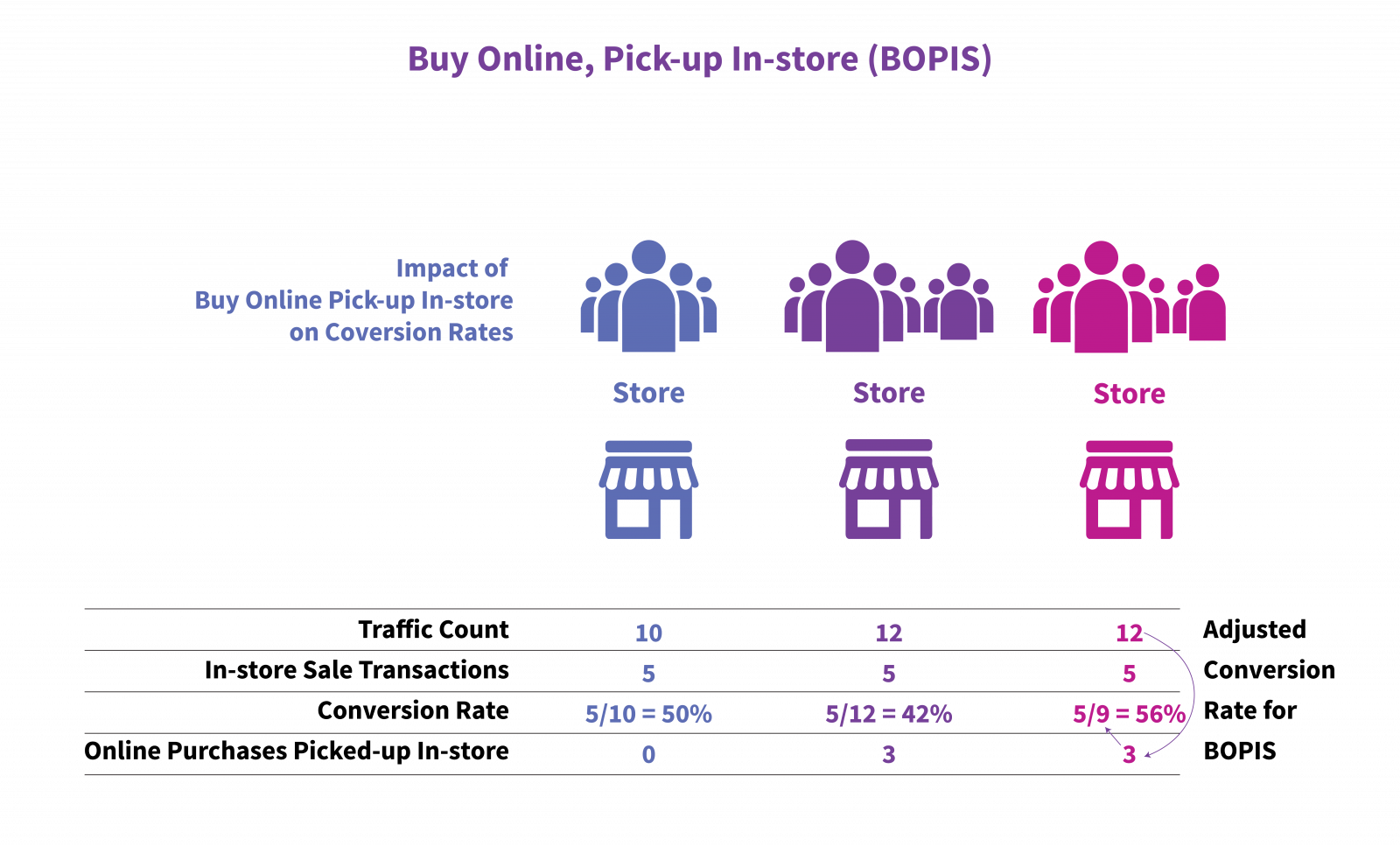
Impact of Click & Collect on Conversion Rate
Customers expect a seamless experience regardless of how they engage with a retailer and these expectations are blurring the lines between online and physical stores. Concepts such as Click and Collect are impacting store traffic patterns and conversion rates.
At the store depicted here, the store traffic counts went up from 10 to 12 after the implementation of omni-channel retail solutions that enabled Click & Collect, sometimes also referred to as Buy Online, Pick-up In-Store (BOPIS) functionality.
Since three of the 12 traffic counts generated were ‘pre-converted’ i.e., already purchased online and came to the store to pick-up their purchase; they didn’t generate a sales transaction. If we don’t track that Click & Collect transaction and factor it into our conversion rates, then the only thing that we will conclude is that our conversion rates have dropped from 50% to 42% in this example.
Reasons why in-store shoppers didn’t convert
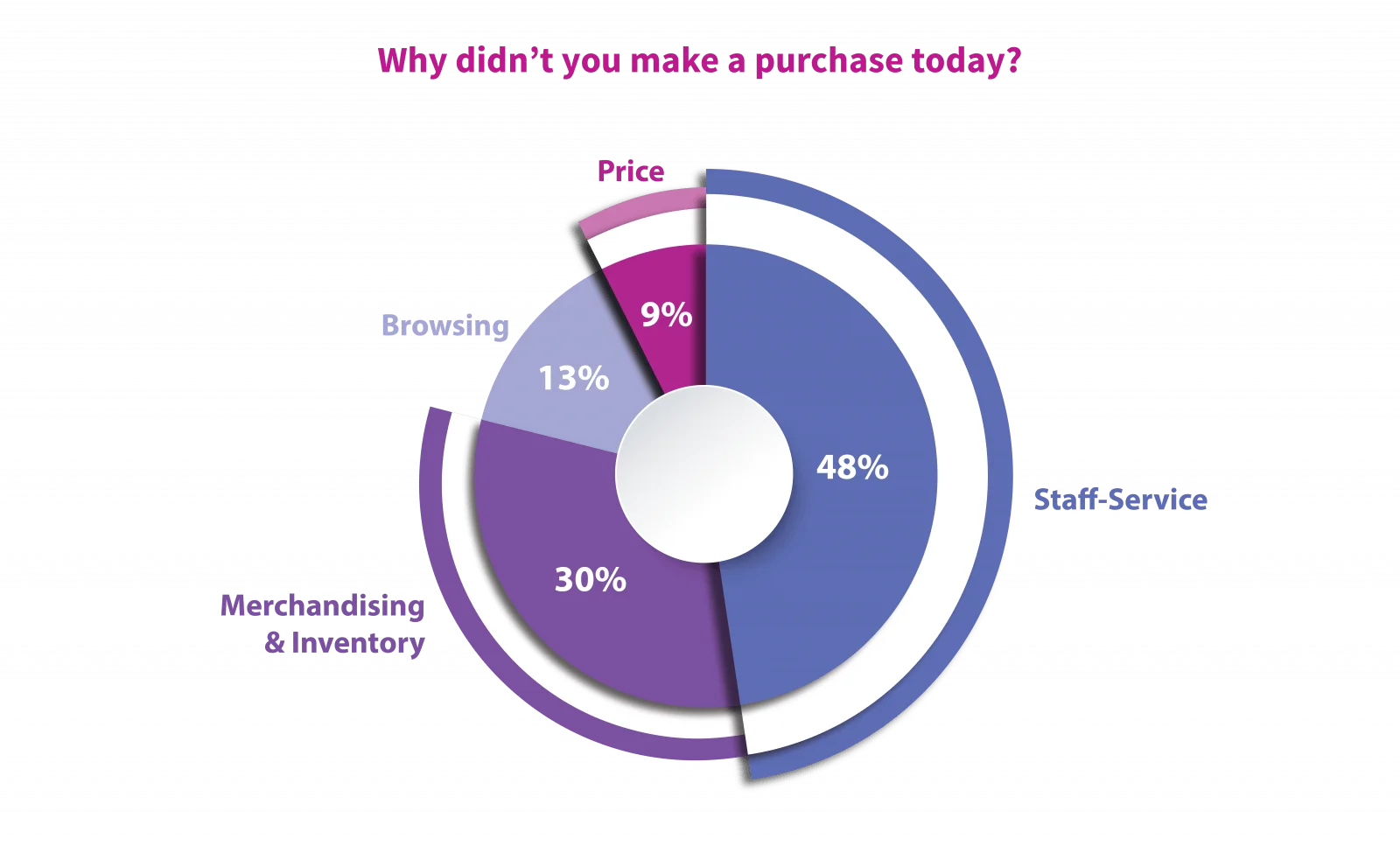
The most cited reasons why in-store shoppers didn’t purchase are:
- They could not find anyone to help them; and
- They did not want to wait in a queue at check-out.
- They could not find what they were looking for or the preferred item was out-of-stock.
This draws attention to the impact in-store staff have on conversion rates. Getting the store teams engaged and encouraging them to apply insights from traffic and conversion analytics can play a winning role in driving the conversion rates at the store.
Solutions such as mobile POS, self-checkouts can address the long wait-time at the checkout counters by enabling effective queue busting at the store.
The merchandising and product availability challenges can be countered by deploying omni-channel features such as endless aisle.
In conclusion, modern day retailers need to implement innovative software solutions that allow them to transform their business in to omni-channel as well as equip them with the power of capturing and analyzing data across channels. This will help them boost the conversion rates at the brick-and-mortar store.
Source: http://www.retailwire.com/public/sponsors/headcount/assets/HeadCount-Conversion-Rate-Optimization-2017.pdf
- Làm thế nào để tích hợp cửa hàng trực tuyến và cửa hàng truyền thống thành một trải nghiệm khách hàng thống nhất và liền mạch (mà không phải mất hàng tháng trời để giải quyết những rắc rối liên quan đến việc tích hợp).
- Tận dụng các thông tin chi tiết dựa trên AI để quản lý hàng tồn kho, giảm thiểu lãng phí và tối đa hóa doanh số trên mọi kênh.
- Các ví dụ thực tế về cách nền tảng của ETP hiện đang mang lại hiệu quả có thể đo lường được và sự gia tăng đáng kể về doanh thu cho các nhà bán lẻ hàng đầu.