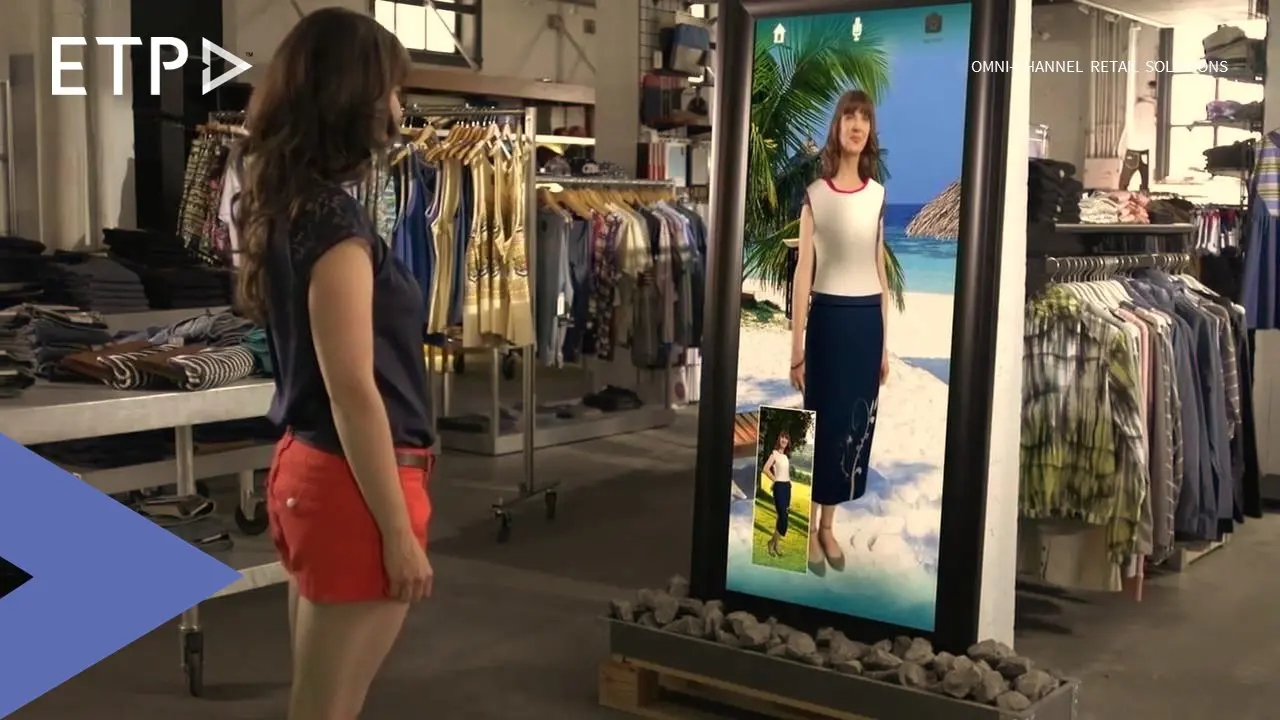
There has been a complete turnaround in the way retailers go about carrying their businesses in recent years. From quick online payments to fast product deliveries, retailers have incorporated various disruptive strategies to provide a hassle free shopping experience. But there are various other technological advancements that facilitate retailers in streamlining their business processes. One such advancement that has proved to be quite successful for retailers is Augmented Reality (AR).
AR as the name suggests augments or enhances our surroundings by enabling us to interact with the products we wish to purchase. Now, one may wonder why we need an enhanced environment for interacting with the products. Well, the idea is pretty simple, customers often search for the desired products online before making a purchase. However, it is difficult for them to understand the features of the product completely, resulting in a lost sales opportunity for the retailers. To not miss out on an online sale, it is imperative for the retailers to find newer avenues that lure the customers to make the purchase. In an era where handheld devices are commonplace, it easier for them to develop an application or an e-commerce website that can access the front/web camera of the customers’ devices and allow them to look at themselves interacting with the product through AR, thus, making it more easier for them to make the buying decision and thus, the purchase.
It is not limited to mobile applications and e-commerce websites; retailers having brick-and-mortar stores too can adopt this technology. For instance, apparel retailers can embed AR technology with their store mirrors converting them into smart mirrors. This helps people to experience the products without actually trying them. It is a great technological advancement that can also be used as a marketing tool as it impels customers to experience this at the stores. It helps in increasing the store footfall which in turn increases the chances of people making a purchase, resulting in an improved bottom line for the retailers.
AR also enhances the efficiency of the store in which it is used. It saves the customers’ time as they are not required to try out every product physically, resulting in less number of people queueing outside the trial room. Moreover, in a short span, a wide variety of products can be tried which allows the in-store staff to better understand the requirements of other customers, thus eliminating the possibility of a customer being neglected.
AR along with various other technological advancements has changed the scenario of retailing worldwide. It has been embraced by some of the biggest retailers across the globe and is all set to penetrate further into the retail space. Retailers should keep themselves abreast with such technological advancements since these shall become indispensable for them to maintain a prominent stature in the dynamic retail space.
- Làm thế nào để tích hợp cửa hàng trực tuyến và cửa hàng truyền thống thành một trải nghiệm khách hàng thống nhất và liền mạch (mà không phải mất hàng tháng trời để giải quyết những rắc rối liên quan đến việc tích hợp).
- Tận dụng các thông tin chi tiết dựa trên AI để quản lý hàng tồn kho, giảm thiểu lãng phí và tối đa hóa doanh số trên mọi kênh.
- Các ví dụ thực tế về cách nền tảng của ETP hiện đang mang lại hiệu quả có thể đo lường được và sự gia tăng đáng kể về doanh thu cho các nhà bán lẻ hàng đầu.