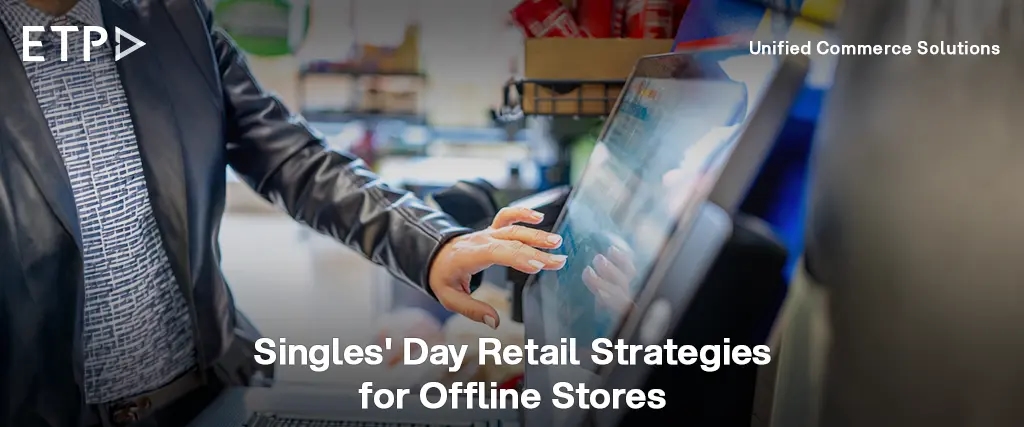
A shopping event built around November 11 now starts attracting customers well before the date arrives. Promotions are announced in advance, shoppers compare products across platforms, and retailers prepare inventory and fulfilment operations for demand that can extend beyond the main sale day.
Singles' Day, also known as the 11.11 shopping festival, has evolved into a much broader retail campaign. What began as an online shopping event in China has become an example of how retailers can build anticipation, influence purchase decisions and manage demand across an extended promotional period.
For offline retailers, the lesson goes beyond offering bigger discounts.
The evolution of Singles' Day shows how important it is to connect promotions, inventory, store operations and customer engagement. A retailer does not need to replicate the scale of a major e-commerce marketplace to benefit from these strategies. Many of the underlying principles can be applied to physical stores, particularly those operating across multiple locations or combining in-store and digital sales.
From a One-Day Sale to a Longer Shopping Journey
The original appeal of Singles' Day was straightforward. Customers waited for November 11 to access promotional offers, while retailers concentrated their marketing and sales activity around a single date.
Over time, the shopping experience became more elaborate.
Early promotional periods, pre-orders, product previews and digital campaigns gave customers more time to discover products and plan purchases. The main sale date remained important, but it became one part of a longer shopping journey.
This shift has changed how retailers need to approach promotional planning.
A customer might discover a product during an early campaign, compare prices several days later and complete the purchase when a preferred offer becomes available. Another shopper may wait until the main sale period to visit a physical store and examine the product before buying.
The transaction may happen on a particular day, but the purchase decision often develops over a much longer period.
For offline retailers, this raises an important question: Why concentrate all promotional activity on one weekend when customer interest can be developed over several weeks?
A longer promotional window gives retailers more opportunities to engage customers, manage demand and encourage purchases without relying entirely on last-minute discounts.
What Can Offline Retailers Learn from Singles' Day?
The most useful lessons are operational as much as promotional. Extended campaigns require retailers to coordinate product availability, pricing, customer communication and fulfilment throughout the shopping journey.
1. Build Anticipation Before the Sale Begins
A major reason extended shopping campaigns work is that customers have time to explore products before making a purchase.
Physical retailers can apply this approach through early product previews, loyalty-member offers, personalised invitations and limited-period promotions.
Consider a fashion retailer preparing for a seasonal sale. Instead of announcing discounts across every category on the same day, it could introduce a preview collection for loyalty members, followed by category-specific offers and a final promotional weekend.
Customers have more reasons to engage with the brand, while the retailer gains opportunities to understand which products are attracting interest.
This approach also gives merchandising teams time to evaluate demand and adjust promotional priorities.
The key is to create a clear promotional calendar. Customers should understand when offers begin, which products are included and how long each promotion remains valid.
Extending a sale without a clear plan can create confusion, particularly when prices or offers differ across stores and digital channels.
2. Make Promotions Consistent Across Every Store and Channel
A customer sees a promotional offer online and visits the nearest store to purchase the product. At checkout, the store associate discovers that the offer is unavailable at that location.
The customer now has to choose between paying more, returning to the website or abandoning the purchase.
Such situations highlight a common challenge in omnichannel retail: promotional information is not always consistent across different sales channels.
For retailers operating multiple stores, managing discounts, eligibility rules and promotional periods through disconnected systems can become difficult.
A coordinated retail promotion management approach helps businesses maintain greater control over campaign execution.
For example, a retailer may want to introduce a promotional offer across selected stores, extend it to an e-commerce channel and apply specific conditions for loyalty members.
These decisions require clear promotional rules and reliable execution at the point of sale.
ETP Unify's Unified Promotions Management capabilities support retailers in managing promotions across connected retail operations.
For offline retailers, the broader lesson is that promotional success depends on execution. A compelling offer can lose its value when customers encounter inconsistent prices or unexpected restrictions at checkout.
3. Use Real-Time Inventory Visibility to Support Promotional Demand
Extended shopping festivals create a particular inventory challenge.
Demand does not necessarily arrive evenly throughout the campaign. A product that attracts limited attention during an early promotional period may suddenly become popular when an additional offer is introduced.
For physical retailers, this can lead to uneven stock distribution across locations.
One store may sell out of a popular product while another continues to hold inventory. Without accurate information, store associates may be unable to help customers locate available stock.
Imagine an electronics retailer running an 11.11 promotion across its stores and website.
A customer visits a store to purchase a discounted appliance, but the preferred model is unavailable. The same product may be sitting in another branch or warehouse.
With real-time inventory visibility, the retailer can identify where stock is available and explore alternative fulfilment options.
Unified Inventory Management helps retailers maintain visibility across stores, warehouses and other connected sales channels.
This supports better inventory decisions during promotional campaigns, including stock transfers, replenishment planning and identifying products that may require additional attention.
The lesson from Singles' Day is clear. Generating demand is only part of a successful campaign. Retailers must also know where their inventory is and how customers can access it.
4. Connect Online Discovery with In-Store Purchases
Customers rarely follow a single, predictable path to purchase.
A shopper may discover a product through a social media campaign, compare specifications on a website and visit a store to examine it before buying.
Another customer might find a product in-store but prefer to complete the transaction online for delivery convenience.
These behaviours make the relationship between physical and digital retail increasingly important.
Offline retailers can respond by making it easier for customers to move between channels without restarting their shopping journey.
Consider a customer browsing a footwear retailer's website during a Singles' Day promotion.
The customer identifies a preferred pair of shoes but wants to check the fit before purchasing. If the retailer provides visibility into store availability, the customer can visit a suitable location rather than searching across several branches.
Similarly, a shopper who cannot find the required size in-store may still complete the purchase if the associate can locate it elsewhere in the retail network.
Capabilities such as Click and Collect and Endless Aisle can help retailers support these shopping journeys.
ETP Unify brings together relevant unified commerce solutions, including retail POS, inventory management and order management capabilities, to support connected retail operations.
For offline retailers, the opportunity lies in making physical stores an active part of the broader customer journey rather than treating them as separate sales destinations.
5. Give Store Associates Better Information During the Sale
Digital shopping platforms can present customers with product details, recommendations and available options throughout their shopping journey.
Physical stores have a different advantage: the ability to provide direct assistance.
But that advantage depends on what store associates know.
During a major promotional campaign, customers may ask about product availability, discounts, alternative sizes, loyalty benefits or delivery options.
If associates need to check multiple systems or contact another department for basic information, the shopping experience can become frustrating.
A connected retail POS environment can help associates access relevant transaction and product information during customer interactions.
For example, a customer purchasing a premium handbag may ask whether a matching accessory is available under the same promotional offer.
An associate with access to relevant product and inventory information is better positioned to assist the customer and identify an appropriate cross-selling opportunity.
AI-powered product recommendations can also support more informed suggestions based on available customer and purchase information.
ETP Unify includes capabilities for retail POS operations, customer information and product recommendations that can support these interactions.
The objective is to help store associates spend less time searching for information and more time assisting customers.
6. Keep Customers Engaged After the Promotional Period
One of the biggest limitations of a short-term sale is that customer engagement can end as soon as the transaction is completed.
A retailer may attract a large number of first-time customers through a promotional campaign but struggle to encourage them to return.
An extended Singles' Day strategy offers opportunities to think beyond the initial purchase.
Customers who buy during a promotional period can be introduced to relevant product categories, loyalty benefits or future collections based on their preferences.
For example, a customer who purchases premium skincare products during an 11.11 campaign may be interested in complementary products later.
A homeware retailer could use purchase information to recommend related furnishings after the promotional period ends.
Such communication should reflect customer preferences and appropriate marketing permissions rather than relying on repeated discount messages.
Retailers can also evaluate whether promotional customers return at full price, which product categories encourage repeat purchases and how customer behaviour changes after the campaign.
These insights can help marketing and merchandising teams assess the long-term value of promotional activity.
A Longer Sale Needs More Than a Longer Promotional Calendar
Extending a campaign from one day to several weeks may sound straightforward. In practice, it creates additional operational demands.
Promotions may change throughout the campaign. Inventory moves between locations. Customers switch between physical and digital channels, while store teams need accurate information to complete transactions.
If these activities are managed independently, the retailer may struggle to maintain consistency.
For example, the marketing team may launch a new offer without sufficient visibility into available inventory. A popular product could be promoted heavily in a region where stock is already limited.
Alternatively, a retailer may have adequate inventory across its network but lack the systems needed to identify and fulfil demand from the most suitable location.
These challenges are particularly relevant to retailers managing large store networks.
A connected approach to retail operations allows different teams to work with more consistent information.
For merchandising, this means understanding product availability before planning promotions.
For store operations, it means supporting customer requests with reliable inventory and transaction information.
For marketing, it means coordinating campaigns with actual product availability and customer preferences.
For fulfilment teams, it means having visibility into orders and available fulfilment options.
The larger lesson from Singles' Day is that promotional planning and retail operations need to work together throughout the campaign.
How ETP Unify Supports Connected Promotional Retail Operations
Retailers planning extended promotional campaigns need systems that can support changes in demand, product availability and customer behaviour.
ETP Unify, ETP Group's unified commerce platform, connects key retail capabilities to help businesses manage physical and digital commerce operations.
Relevant capabilities include:
- Unified Promotions Management: Supports the management of promotional offers and rules across connected retail channels.
- Unified Inventory Management: Provides visibility into inventory across stores, warehouses and sales channels.
- Cloud POS and Retail Operations: Supports in-store transactions and access to relevant retail information.
- Smart Order Management: Helps retailers manage orders and fulfilment processes across connected channels.
- AI-Powered Product Recommendations: Supports relevant product suggestions using available customer and purchase information.
- Click and Collect and Endless Aisle: Provide additional ways for customers to access products across the retail network.
These capabilities are relevant to retailers looking to coordinate promotional activity without treating each store, channel or operational function as an isolated part of the business.
The purpose of connected commerce technology is to support better retail decisions and more consistent customer experiences, particularly when promotional demand places additional pressure on operations.
The Real Singles' Day Lesson: Think Beyond November 11
Singles' Day demonstrates how a promotional event can evolve into a longer period of customer discovery, purchasing and engagement.
For offline retailers, the opportunity is to apply the underlying lessons to their own businesses.
A fashion retailer may benefit from early collection previews and coordinated promotions. An electronics retailer may focus on product availability and fulfilment flexibility. A department store may find greater value in connecting customer information, inventory and product recommendations across categories.
The right approach will depend on the retailer's customers, product mix and operating model.
What matters is the ability to plan promotional activity around the complete shopping journey.
Customers need accurate offers, reliable product availability and convenient ways to purchase. Retailers need the information and operational coordination to deliver those experiences consistently.
A successful campaign should leave the business with more than a temporary increase in transactions. It should also provide useful insights into customer preferences, product demand and opportunities for future engagement.
November 11 may remain the headline date, but the decisions that influence retail performance begin well before it and continue after the sale ends.
Explore how ETP Unify can help your retail business connect stores, promotions, inventory and customer experiences across channels. Book a demo.
Common Questions Retail Leaders Ask
1. What is Singles' Day, and why is it important for retailers?
Singles' Day is a shopping festival held annually on November 11, also known as 11.11. Originating in China, it has developed into a major promotional event involving online marketplaces, brands and retailers. Its extended promotional periods offer lessons in customer engagement, inventory planning and coordinated retail operations.
2. How can offline retailers benefit from Singles' Day retail strategies?
Offline retailers can apply strategies such as early promotional campaigns, loyalty-member previews, consistent offers across channels and improved inventory visibility. These approaches help physical stores engage customers over a longer period and provide more convenient shopping experiences.
3. How does omnichannel retail support extended promotional campaigns?
Omnichannel retail connects physical and digital shopping channels, allowing customers to discover, purchase and receive products through different touchpoints. During extended promotional campaigns, connected inventory, POS and order management systems can help retailers maintain consistent offers and support flexible fulfilment options.
4. Why is real-time inventory visibility important during major retail sales?
Real-time inventory visibility helps retailers understand product availability across stores, warehouses and sales channels. During promotional campaigns, this information supports replenishment decisions, stock transfers and customer requests for products unavailable at a particular location.
5. How can unified commerce solutions improve promotional retail operations?
Unified commerce solutions connect retail functions such as POS, inventory, promotions, order management and customer information. This helps retailers coordinate campaigns across channels, improve access to operational information and provide more consistent shopping experiences.
- วิธีรวมร้านค้าออนไลน์และร้านค้าจริงของคุณเป็นประสบการณ์ลูกค้าที่กลมกลืนเป็นหนึ่งเดียว (โดยไม่ต้องเสียเวลาหลายเดือนไปกับการบูรณาการที่ยุ่งยาก)
- ใช้ข้อมูลเชิงลึกจาก AI เพื่อจัดการสต็อก ลดการสูญเสีย และเพิ่มยอดขายให้สูงสุดในทุกช่องทาง
- ตัวอย่างจากโลกจริงที่แสดงให้เห็นว่าแพลตฟอร์มของ ETP กำลังช่วยเพิ่มประสิทธิภาพที่วัดได้และเพิ่มรายได้อย่างมีนัยสำคัญให้กับผู้ค้าปลีกชั้นนำ