At the end of every financial year, retail leadership teams sit down with the same uncomfortable question: is our loyalty programme actually working? The membership numbers look impressive. Enrolment rates are up. The database is full. But when the CFO asks how many of those members actively redeem, how many top-tier customers stayed in tier, and what the earned-versus-redeemed point ratio looks like, the room goes quiet.
This is loyalty programme leakage. And it is far more common than most brands admit. Points are issued generously. They sit unearned, unredeemed, and unnoticed. Customers who signed up for a rewards card two years ago have not returned. Your Gold tier is quietly churning. The programme is running but loyalty, the real kind, is not.
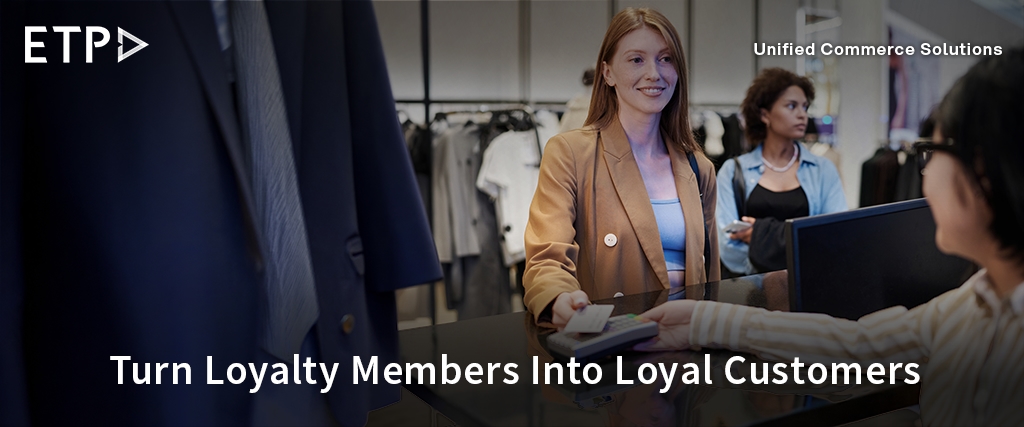
The creative says it plainly: You have members. Not loyal customers. Points are earned. But loyalty isn't. This distinction is the difference between a programme that looks good on a slide and one that drives measurable, compounding revenue.
The Anatomy of Loyalty Programme Leakage
Loyalty leakage does not happen for one reason. It happens because of four interconnected failures that erode programme value over time.
1. Disconnected Channel Recognition A customer earns points in-store but shops online the following week, and the cashier does not recognise her. The loyalty profile that exists in one system is invisible to another. That transaction is lost: no points, no personalisation, no reinforcement of the brand relationship. Multiply this across thousands of customers shopping across channels, and you have a programme that works in theory but fails consistently in practice.
2. Low Redemption Rates Industry benchmarks suggest that a healthy loyalty programme redemption rate sits between 15% and 25%. Most retail programmes operate well below this. When redemption is low, it signals one of three problems: the rewards are not compelling, the redemption process is too friction-heavy, or customers have simply forgotten they have points at all. A programme that earns but never redeems is not driving loyalty, it is accumulating liability.
3. Inactive Member Bloat Research consistently shows that consumers belong to many loyalty programmes but actively engage with fewer than half of them. Your member count may look healthy, but if a significant portion has not transacted in six months or more, you are measuring the illusion of loyalty, not its substance. These dormant members represent a missed re-engagement opportunity, and every quarter they stay inactive, the gap between membership and genuine loyalty widens.
4. Top-Tier Customer Churn Perhaps the most commercially damaging form of leakage is silent churn at the top tier. These are your highest-value customers, your Gold and Platinum members, whose spend, frequency, and lifetime value are disproportionately important to your P&L. When they downgrade or disengage, they rarely announce it. They simply stop coming as often. By the time your reports flag the drop, months of revenue have already been lost.
The Root Cause: A Fragmented Customer View
When brands dissect why their loyalty programmes leak, they often look first at programme design: the points structure, tier thresholds, reward catalogue. These matter. But the deeper, more pervasive root cause is almost always the same: fragmented data.
When your point of sale, e-Commerce platform, CRM, and loyalty engine operate on separate systems, you cannot build a single, coherent picture of who your customer is. You cannot recognise her when she switches channels. You cannot see that she has not redeemed in four months. You cannot trigger a meaningful intervention before she churns. You cannot personalise an offer based on her actual purchase history because that history is scattered across systems that do not talk to each other.
Data silos are loyalty voids. Without a unified customer view, every touchpoint is an opportunity missed. Without real-time data flowing across channels, every interaction feels transactional rather than relational. And without personalisation at scale, your programme remains a points ledger rather than a loyalty engine.
This is why the conversation about loyalty leakage must always bridge to the conversation about unified commerce. The two are inseparable.
Also Read: Unified Commerce vs. Omnichannel: The Future of Retail Today
The ETP Unify Solution: CRM and Loyalty Management
ETP Group's cloud-native retail solution, ETP Unify, is built on a single unified database. One source of truth for every customer interaction, transaction, loyalty point, and promotional touchpoint across every channel. This architectural foundation is what makes genuine loyalty management possible.
ETP Unify's retail Customer Relationship Management and Loyalty Management capabilities are designed specifically to close the gaps where leakage occurs.
Unified Cross-Channel Loyalty Recognition
With ETP Unify, every customer has a single profile: one record that captures purchases, points, preferences, and tier status whether they shop in-store, online, via a mobile app, or through any other channel.
The in-POS earn and burn feature means loyalty is recognised and rewarded at the moment of every transaction, not reconciled later.
A customer who shops online on Tuesday and walks into your store on Thursday is recognised, greeted appropriately, and rewarded consistently. This is what omnichannel loyalty management actually means in practice.
RFM-Based Segmentation and Targeted Promotions
ETP Unify's unified promotions management leverages Recency, Frequency, and Monetary (RFM) analysis to segment your customer base with precision.
Rather than sending the same communication to your entire membership, you can identify who is at risk of churning, who is primed for upselling, and who needs a win-back nudge and serve each segment a promotion that is genuinely relevant to their behaviour.
The AI in retail software capabilities within ETP Unify surface these insights and automate personalised promotion recommendations at the point of interaction, turning your retail POS software into an active loyalty tool.
Also Read: AI in Unified Commerce: 14 Enterprise Retail Use Cases | ETP Group
Flexible Loyalty Scheme Definition
Not every customer segment, product category, or store format should operate under the same loyalty rules. ETP Unify allows retailers to define loyalty schemes specific to customer groups, items, stores, or the entire chain and to implement consistent programmes across all participating locations in a given currency.
This flexibility means your loyalty programme can be as nuanced as your business requires, without the operational complexity of managing multiple disconnected platforms.
Real-Time Point Rectification and Trust Maintenance
One of the fastest ways to erode customer trust is a point discrepancy that goes unresolved.
ETP Unify enables centralised, real-time point rectification, ensuring that when errors occur, they are corrected immediately and accurately, maintaining the integrity of the programme and the trust of the member.
360° Customer View for Clienteling and Proactive Re-Engagement
ETP Unify's retail Customer Relationship Management module gives store associates a complete, real-time view of each customer's journey: registration, purchase history, loyalty tier, outstanding points, and promotional eligibility, all surfaced within the unified commerce point of sale (POS) interface at the moment of interaction.
This enables genuine clienteling: associates can proactively reach out to top-tier customers before they churn, recommend products based on purchase patterns, and create the kind of personalised experience that converts a member into a loyalist.
Also Read: Why Retailers Need a Unified Customer View to Drive Loyalty and Revenue
From Members to Loyalists: What Good Looks Like
When loyalty data is unified and the programme runs on a single platform, the operational picture changes entirely.
A Gold-tier customer who has not visited in eight weeks receives a personalised, high-value offer via the channel she prefers, not a generic blast.
A dormant member who last purchased in a category that is now on promotion receives a contextual, relevant nudge that brings her back without a blanket discount.
A first-time loyalty member earns points at the checkout, sees her balance instantly on the receipt, and has a reason to return.
Every interaction earns trust, not just points. Every data point from every channel contributes to a richer, more actionable customer profile. And at year-end, when leadership asks whether the loyalty programme is working, the answer is grounded in redemption rates, tier retention, and measurable revenue, not just member counts.
This is what unified commerce strategy makes possible. And this is what brands that move from fragmented systems to a cloud-native retail software platform like ETP Unify consistently experience.
Also Read: Unified Commerce Strategy & POS | Boost Retail Performance in 2026
Stop Counting Members. Start Building Loyalty
If your loyalty programme is full of members but short on loyalists, the answer is not a new rewards catalogue, it's a unified commerce retail POS platform that gives every touchpoint the intelligence to recognise, reward, and re-engage your customers in real time.
ETP Unify brings your POS, CRM, loyalty management, promotions, and customer data onto a single cloud-native retail software platform built on MACH architecture, powered by AI in retail technology, and designed to turn transactional data into genuine customer relationships.
Ready to close the loyalty gap? Talk to an ETP expert today →
- Cara menyatukan toko online dan toko fisik Anda menjadi satu pengalaman pelanggan yang terpadu (tanpa harus repot menghabiskan berbulan-bulan untuk proses integrasi).
- Memanfaatkan wawasan berbasis kecerdasan buatan (AI) untuk mengelola persediaan, mengurangi limbah, dan memaksimalkan penjualan di seluruh saluran.
- Contoh nyata tentang bagaimana platform ETP saat ini memberikan peningkatan efisiensi yang terukur dan lonjakan pendapatan yang signifikan bagi para pengecer terkemuka.