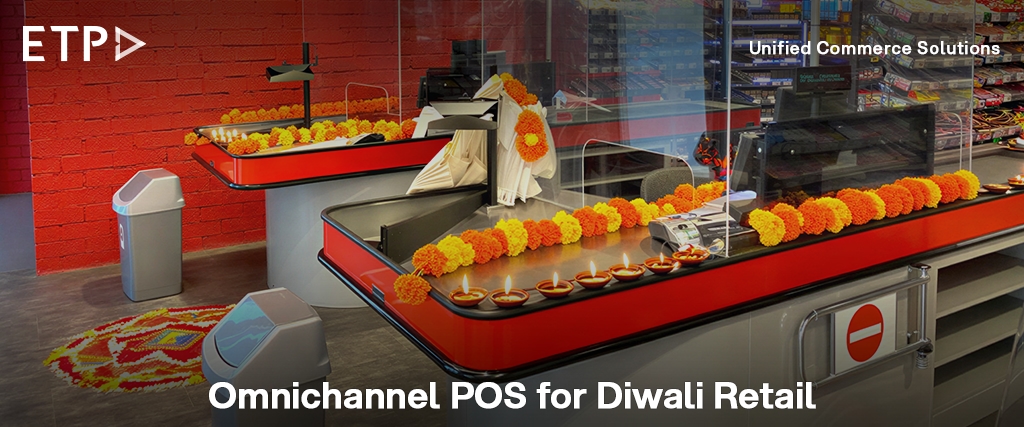
Why Modern Retailers Need a POS Solution for Retail That Goes Beyond Billing
Retail stores are no longer just places where transactions happen. They have become fulfilment hubs, customer engagement centers, return locations, and brand experience destinations. While digital commerce continues to grow across India, Southeast Asia, and the wider APAC region, physical stores remain responsible for the majority of retail sales. According to the National Retail Federation, more than 75% of retail sales still involve a physical store at some stage of the customer journey.
Yet many retailers continue to operate stores using legacy POS systems designed for a much simpler retail landscape. These systems process payments efficiently but often fail to connect inventory, customer data, promotions, and omni-channel fulfilment.
The result is disconnected retail operations, inconsistent customer experiences, and limited visibility for business leaders.
A modern POS solution for retail has evolved far beyond checkout. It now serves as the operational foundation for unified commerce, enabling retailers to deliver seamless experiences regardless of where customers choose to shop.
For enterprise retailers managing multiple stores, countries, channels, and fulfilment models, investing in the right POS solution for retail store is no longer an operational upgrade—it is a strategic business decision.
Why Traditional POS Systems No Longer Meet Retail Expectations
Retail operations have fundamentally changed over the past decade.
- Today's customers expect to:
- Buy online and collect in store
- Return online purchases at any store
- Access the same promotions across channels
- Earn and redeem loyalty points everywhere
- Receive personalized recommendations
- Experience consistent pricing across locations
These expectations place significant pressure on store operations.
Legacy POS systems typically operate independently from ecommerce, inventory, CRM, and warehouse systems. Every disconnected system creates operational friction.
Common challenges include:
- Inventory inaccuracies
- Delayed stock synchronization
- Manual price updates
- Inconsistent promotions
- Fragmented customer profiles
- Limited visibility across stores
Expert Insight
Retailers that rely on disconnected commerce systems often struggle with inaccurate inventory, delayed fulfilment, and inconsistent customer experiences. Modern unified POS platforms eliminate these gaps by creating a single operational view across every retail touchpoint.
What Is a Modern POS Solution for Retail?
A modern POS solution for retail is a cloud-native retail platform that connects store operations with the broader retail ecosystem.
Instead of functioning only as billing software, it integrates:
- Sales transactions
- Customer profiles
- Promotions
- Loyalty
- Returns and exchanges
- Real-time inventory
- Omni-channel fulfilment
- Workforce operations
- Store performance analytics
This enables stores to become active participants in the retailer's unified commerce strategy rather than isolated sales channels.
How Does a Cloud-Native POS Improve Retail Operations?
Cloud technology has transformed enterprise retail software.
Unlike traditional on-premise deployments, cloud-native POS platforms offer centralized management, faster updates, stronger scalability, and greater operational resilience.
Key advantages include:
Real-Time Inventory Visibility
Every sale, return, transfer, or stock adjustment updates inventory instantly across stores and digital channels.
This significantly reduces overselling, stockouts, and inventory inaccuracies.
Faster Store Rollouts
Retailers expanding across regions can deploy new stores much faster without extensive local infrastructure.
This becomes especially valuable for growing retail chains across India and Southeast Asia.
Centralized Promotions
Marketing teams can launch promotions once and ensure consistent execution across all stores.
This reduces pricing inconsistencies while improving campaign effectiveness.
Better Business Continuity
Cloud-native systems support offline selling capabilities while automatically synchronizing transactions once connectivity returns.
This minimizes disruption during network interruptions.
Continuous Innovation
Retailers receive new features, security enhancements, and compliance updates without complex upgrade projects.
Also read: Omni-channel POS Solution: The Strategic Backbone of Retail Operations
Why Omni-channel Retail Depends on an Omni-channel Point of Sale System
Customers rarely think in channels.
Retailers shouldn't either.
Whether a customer shops through a mobile app, marketplace, e-Commerce website, or physical store, they expect one connected experience.
An omni-channel point of sale system enables retailers to support:
- Buy Online Pick Up In Store (BOPIS)
- Ship-from-store
- Endless aisle
- Click and Collect
- Cross-store returns
- Unified promotions
- Shared loyalty programs
Without a connected POS infrastructure, these experiences become operationally difficult and expensive.
According to McKinsey, retailers delivering seamless omni-channel experiences consistently outperform peers in customer satisfaction and long-term revenue growth.
How Does Retail POS Software Improve Inventory Management?
Short Answer
Modern retail POS software improves inventory management by synchronizing stock movement in real time across stores, warehouses, and digital sales channels, enabling retailers to maintain accurate inventory visibility and fulfil customer orders more efficiently.
Why this matters
Inventory remains one of retail's biggest profitability challenges.
Without accurate stock information, retailers experience:
- Lost sales
- Overstock
- Higher markdowns
- Manual stock reconciliations
- Poor customer experiences
A connected POS continuously updates inventory whenever products are:
Sold
- Returned
- Exchanged
- Reserved
- Transferred
- Received
Store associates can instantly view stock availability across locations, improving fulfilment flexibility while increasing inventory accuracy.
How Customer Data Turns POS into a Revenue Driver
Modern retail is increasingly customer-centric.
Every transaction provides valuable insights into customer preferences, buying behavior, and lifetime value.
An integrated POS platform enables retailers to:
- Build unified customer profiles
- Deliver personalized promotions
- Improve loyalty participation
- Recommend relevant products
- Track purchase history
- Support clienteling
When integrated with omni-channel CRM solutions, retailers can create highly personalized shopping experiences regardless of channel.
Instead of treating stores as transaction points, retailers transform them into relationship-building environments.
What Should Enterprise Retailers Look for in Online Retail POS Software?
Choosing online retail POS software involves much more than evaluating billing features.
Enterprise retailers should assess whether the platform supports long-term digital transformation.
Enterprise POS Evaluation Checklist
Choose a platform that offers:
- Cloud-native architecture
- Real-time inventory synchronization
- Omni-channel order fulfilment support
- Flexible promotions engine
- Customer loyalty integration
- Mobile POS capabilities
- Offline transaction support
- Multi-country deployment
- Local tax and regulatory compliance
- Centralized reporting and analytics
- API-driven integrations
- Enterprise-grade security
- Scalable architecture for future expansion
These capabilities enable retailers to adapt quickly as customer expectations continue evolving.
The Future of Retail POS Is Intelligent, Connected, and Cloud-Native
Retail technology is entering a new phase.
Artificial intelligence, predictive analytics, mobile commerce, and unified customer data are becoming essential components of store operations.
Future-ready POS platforms will increasingly support:
- AI-assisted selling
- Predictive inventory recommendations
- Intelligent promotions
- Mobile-first store experiences
- Associate productivity tools
- Real-time operational insights
Retailers investing today are not simply replacing checkout systems—they are building the operational foundation for future growth.
How ETP V5 Helps Retailers Build Future-Ready Stores
Modern retail requires technology that connects every aspect of store operations while remaining flexible enough to support future business models.
ETP V5, ETP Group's cloud-native POS solution for retail, is designed to help enterprise retailers simplify store operations while supporting unified commerce at scale.
Key capabilities include:
- Cloud-native retail POS
- Real-time inventory visibility
- Omni-channel order fulfilment
- Unified promotions management
- Integrated customer engagement
- Mobile POS support
- Multi-store and multi-country operations
- Enterprise-grade security
- Offline transaction capability
- Flexible integrations with enterprise retail ecosystems
Whether retailers are expanding across cities, countries, or channels, ETP V5 provides a scalable foundation for delivering consistent customer experiences while improving operational efficiency.
Final Thoughts
The role of the retail POS has fundamentally changed.
It is no longer just a checkout applicatio, it is the digital backbone of modern store operations.
Retailers that continue relying on disconnected legacy systems risk slower operations, fragmented customer experiences, and limited visibility across their business.
Conversely, organizations adopting a cloud-native POS solution for retail store gain the agility needed to unify inventory, empower store associates, streamline fulfilment, and deliver the seamless experiences customers now expect.
As unified commerce becomes the standard across India, Southeast Asia, and APAC, choosing the right retail POS platform will play a defining role in long-term retail success.
Ready to Modernize Your Store Operations?
Discover how ETP V5 helps retailers unify store operations, improve inventory accuracy, and deliver seamless omni-channel experiences across every customer touchpoint.
Book a personalized demo with ETP Group's retail experts and explore how ETP V5 can support your retail transformation journey.
Frequently Asked Questions
How does retail POS software improve inventory management?
Retail POS software synchronizes inventory in real time across stores, warehouses, and online channels. Every sale, return, transfer, and stock movement is automatically updated, reducing inventory discrepancies, preventing overselling, and improving fulfilment accuracy.
What are the benefits of using a cloud-based POS system?
Cloud-based POS systems provide centralized management, automatic updates, real-time reporting, improved scalability, lower infrastructure costs, stronger business continuity, and faster deployment across multiple store locations.
How can retail POS software help increase sales and customer satisfaction?
Retail POS software enables faster checkout, personalized promotions, unified loyalty programs, accurate inventory visibility, and seamless omnichannel services such as Click & Collect and cross-channel returns. Together, these capabilities improve customer satisfaction while increasing conversion and repeat purchases.
- How to unify your online and physical stores into a single, cohesive customer experience (without months of integration headaches).
- Leveraging AI-driven insights to manage stock, reduce waste, and maximize sales across every channel.
- Real-world examples of how ETP's platform is currently delivering measurable efficiency and significant revenue uplift for leading retailers.