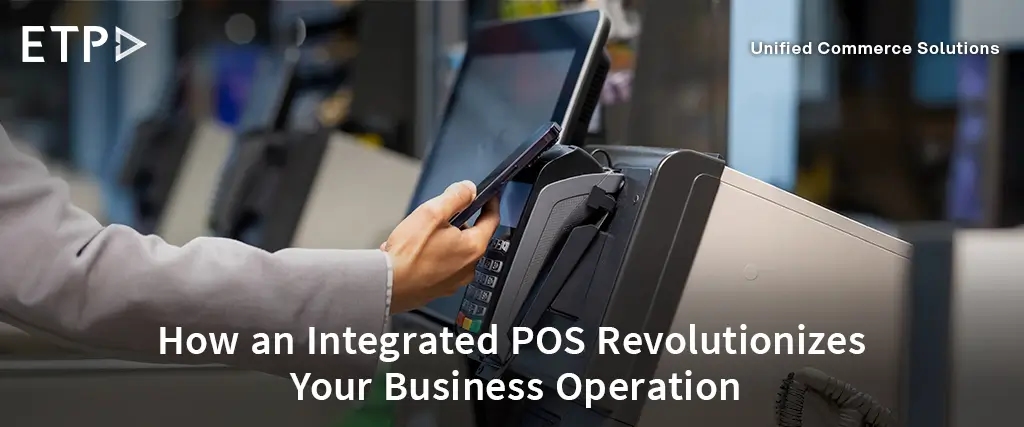
Retail operations today are far more complex than just billing at the counter. Stores manage inventory across locations, handle online orders, process returns anywhere, and still need to deliver fast, accurate service. A basic billing tool cannot keep up with these demands. That’s where an integrated point of sale system changes the game.
An integrated POS is not just about transactions. It connects sales, inventory, customers, and fulfillment into one flow. Let’s break down how the right POS solution for retail store operations can transform efficiency, accuracy, and growth.
What Is an Integrated Point of Sale System?
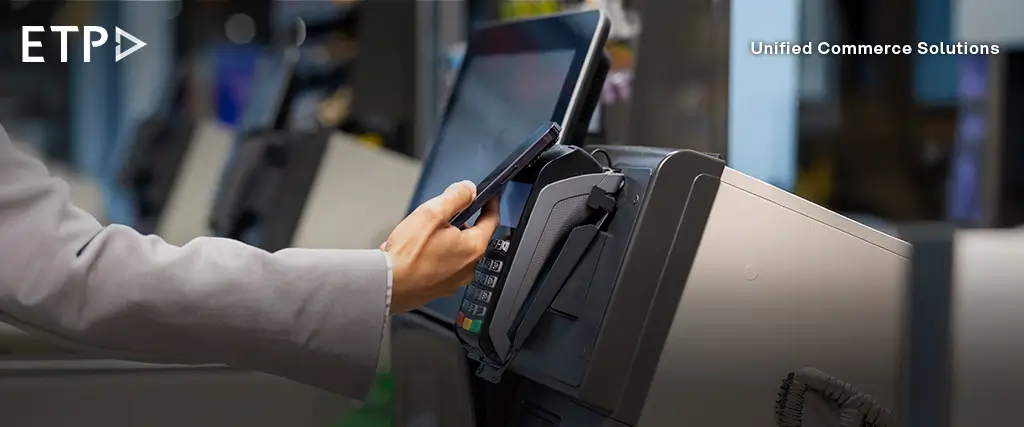
A point of sale system traditionally handles billing and payments. An integrated POS goes much further by connecting the POS system with inventory management, order management, customer data, and sometimes even e-Commerce and warehouse operations.
Instead of operating as a standalone tool, the POS becomes the control center for daily retail activity. Every sale, return, or stock movement updates the system in real time, giving teams a single source of truth.
Why Traditional POS Systems Fall Short
Many retailers still rely on POS systems that only work within the store. Inventory updates happen at the end of the day. Online and offline sales live in separate systems. Customer data is scattered.
This creates blind spots. Store teams cannot see accurate stock. Head offices struggle with reporting. Customers experience delays, cancellations, or inconsistent pricing. As retail scales, these issues multiply.
An integrated POS system removes these gaps by aligning all operations from the start.
Smarter Inventory Control at the Store Level
Inventory is one of the biggest pain points in retail. Without integration, stores often oversell, understock, or manually adjust inventory records.
With an integrated point of sale system, inventory updates instantly after every transaction. Whether the sale happens in store or online, stock levels remain accurate across locations. This makes the POS solution for retail store operations far more reliable and predictable.
Retailers gain better control over replenishment, transfers, and seasonal demand without relying on spreadsheets or manual checks.
Faster and More Flexible Checkout Experience
Speed matters at checkout. An integrated POS system reduces billing time by pulling pricing, promotions, and tax rules directly from the central system.
For customers, this means quicker transactions and fewer errors. For staff, it means less training time and more confidence at the counter. The best POS platforms also support multiple payment modes, returns across stores, and endless aisle ordering from the same screen.
This flexibility is now a baseline expectation, not a premium feature.
Unified View of Customers
Customers expect retailers to recognize them, no matter where they shop. An integrated POS system creates a single customer profile across stores and digital channels.
Purchase history, loyalty points, preferences, and returns are available instantly at the POS. This allows store staff to personalize service and resolve issues faster, while marketing teams gain cleaner data for engagement campaigns.
Seamless Online and Offline Operations
Retail is no longer split between physical and digital. An online retail POS software that integrates with in-store systems ensures that orders, inventory, and pricing stay aligned.
Buy online, pick up in store. Ship from store. Return online orders in store. All of this becomes possible when the POS system is connected to the wider retail ecosystem.
An integrated POS removes channel conflicts and turns every store into a flexible fulfillment point.
Real Time Reporting and Decision Making
Retail decisions cannot wait for end of day reports. Integrated POS systems provide real time visibility into sales, stock, and store performance.
Managers can identify fast-moving products, slow sellers, and operational issues as they happen. This leads to quicker course correction and better planning across merchandising, staffing, and promotions.
For growing retailers, this level of insight is essential.
Reduced Manual Work and Errors
Manual data entry is slow and error-prone. Disconnected POS systems often require teams to reconcile sales, inventory, and finance data manually.
An integrated point of sale system automates these updates. Transactions flow directly into inventory and reporting modules, reducing mismatches and human errors. The result is cleaner data and more reliable operations.
Scalability for Growing Retailers
As retailers expand to new stores, cities, or online channels, systems need to scale without adding complexity.
The best POS platforms are designed to grow with the business. New stores can be added quickly, configurations stay consistent, and data remains centralized. This makes the POS solution for retail store expansion far more manageable and cost effective.
Choosing the Best POS for Long Term Growth
The best POS is not the one with the longest feature list. It’s the one that integrates deeply with your retail operations and supports future growth.
When evaluating a POS system, retailers should look for:
- Real time inventory and order integration
- Support for both store and online operations
- Centralized reporting and analytics
- Flexibility to adapt to new business models
An integrated POS is not just a technology upgrade. It’s an operational shift.
How ETP Cloud POS Revolutionizes Your Retail Operations
ETP’s cloud-native POS takes a point of sale system beyond basic billing into a full retail operations engine. With real-time sync, fast billing, smart search, and offline capabilities, the platform handles high transaction volumes with ease and connects stores to online channels for endless aisle, ship-from-store, and click-and-collect experiences. Store teams get 360-degree customer insights, built-in promotions, and loyalty at checkout, while central teams gain control of inventory, reconciliations, and user roles from one dashboard. What this really means is a unified, scalable retail operation that boosts efficiency, strengthens customer engagement, and positions your business for growth in 2026 and beyond.
The Bigger Picture
Retail success today depends on speed, accuracy, and consistency. An integrated point of sale system brings these elements together in one platform.
By connecting sales, inventory, customers, and channels, retailers reduce friction and unlock better experiences. Whether you run a single store or a growing chain, the right POS system lays the foundation for sustainable growth. Want to know how to do that? Talk to our team: https://www.etpgroup.com/book-a-demo
Frequently Asked Questions
Can a small retail store use an integrated POS system?
Yes. A modern point of sale system is scalable and works just as well for small stores as it does for large chains, making it a practical POS solution for retail store operations of any size.
How does an integrated POS differ from a regular POS system?
A regular POS system focuses mainly on billing, while an integrated POS connects sales with inventory, customers, and online retail POS software for real time visibility and control.
Does an integrated POS enhance data accuracy and reduce manual errors?
Yes. By automating updates across the POS system, inventory, and reporting, the best POS platforms reduce manual entry and improve data accuracy across retail operations.
- How to unify your online and physical stores into a single, cohesive customer experience (without months of integration headaches).
- Leveraging AI-driven insights to manage stock, reduce waste, and maximize sales across every channel.
- Real-world examples of how ETP's platform is currently delivering measurable efficiency and significant revenue uplift for leading retailers.